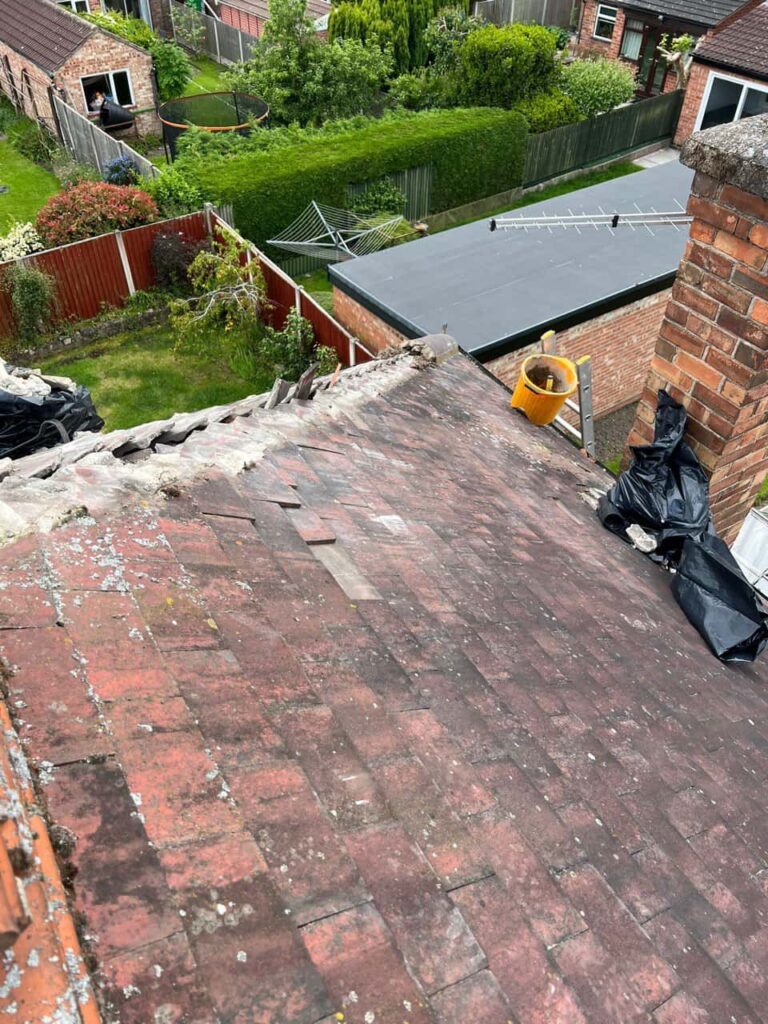
A roofing system includes far more than the visible tiles, slates or surface covering. Underlay, battens, fixings, flashing, valleys, junctions and drainage details must all work together to keep a property protected from the weather.
When several of these components have deteriorated, local repairs may become less dependable. Complete roof replacement provides an opportunity to remove worn materials, examine concealed areas and rebuild the roof as one coordinated system.
How Roof Replacement Can Improve Long-Term Performance
1. It Addresses Several Connected Problems Together
An unreliable roof may develop leaks, loose coverings, damaged flashing and failed mortar in different places. Although each defect can sometimes be repaired individually, the problems may share a common cause, such as widespread underlay failure or deteriorated battens.
Replacement allows these connected weaknesses to be addressed during one planned project. This can provide a more consistent result than adding further repairs to materials that are already approaching the end of their useful condition.
2. It Provides Access to Hidden Roofing Components
The condition of underlay, battens and roof decking cannot always be judged accurately while the outer covering remains in place. Moisture may have caused concealed damage even where tiles or slates appear reasonably sound.
Once the old covering is removed, the contractor can inspect the supporting layers directly. Damaged timber and other unsuitable materials can then be renewed before the new roof is installed.
3. It Creates a Consistent Weatherproof System
A roof that has been repaired many times may contain materials and junctions of different ages. Each patch may have solved a particular problem, but the transitions between old and newer work can become weak points.
Replacement creates consistent layers across the roof. The covering, underlay, battens, fixings and flashing can be installed to work together, reducing reliance on numerous separate patches.
4. It Improves the Reliability of Vulnerable Junctions
Chimneys, valleys, walls, roof windows, ridges and changes in roof level are common locations for leaks. These details handle concentrated rainwater or bring different materials together.
During replacement, vulnerable junctions can be stripped back and rebuilt as part of the new roofing system. This allows overlaps, leadwork and drainage routes to be formed around sound adjoining materials.
5. It Reduces the Likelihood of Repeated Defects
Repairing one failed component does not prevent another worn section from deteriorating soon afterwards. This is particularly relevant when the roof has frequent problems across several slopes.
Replacing widespread ageing materials reduces the number of existing weak points. Future maintenance may still be necessary, but the roof begins with a more uniform and dependable condition.
6. It Allows the Roof to Be Installed for Its Current Requirements
Older roofs may contain unsuitable alterations, poorly matched materials or previous work that does not perform effectively. Replacement provides an opportunity to reassess the roof as a complete structure.
The chosen covering, fixing method, ventilation, drainage and junction details can be considered together. This helps ensure that the finished system is appropriate for the roof’s pitch, shape and exposure.
What Makes a Roofing System Unreliable?
A roof may be becoming unreliable when:
- Leaks develop in several different areas
- Tiles or slates repeatedly slip or break
- Previous repairs begin failing
- Underlay and battens show widespread deterioration
- Valleys or roof junctions leak regularly
- The roofline appears uneven
- Dampness returns after poor weather
- New defects continue appearing on different slopes
One isolated problem does not automatically mean replacement is necessary. These signs become more significant when several occur together.
Can an Older Roof Still Be Repaired?
Age alone should not determine whether a roof is repaired or replaced. An older roof with localised damage and sound supporting materials may still respond well to targeted work.
Repair is more likely to be suitable when the defect has a clear cause, surrounding materials remain serviceable and the new work can integrate securely with the existing roof. Replacement becomes more relevant when deterioration is widespread or concealed layers can no longer provide reliable support.
Why a Professional Assessment Matters
A proper assessment should consider the complete roofing system, including:
- The condition of tiles, slates or other coverings
- Underlay and battens where accessible
- Roof timbers and decking
- Flashing and mortar details
- Ridges, hips, valleys and verges
- Gutters and drainage routes
- Internal staining and moisture paths
- The position and condition of previous repairs
This evidence allows the recommended work to reflect the roof’s actual condition rather than its appearance from ground level.
What Happens During Roof Replacement?
The existing covering is removed so the supporting structure can be inspected. Unsuitable underlay, battens and damaged materials are renewed before the new weatherproof layers are installed.
Particular attention should be given to roof edges, valleys, ridges and junctions around chimneys or walls. These details are essential to the performance of the completed roof and should be integrated carefully with the new covering.
Conclusion
Replacing an unreliable roofing system can address multiple connected defects, expose hidden damage and create consistent weatherproof protection. It also allows vulnerable junctions, supporting materials and drainage details to be rebuilt as part of one coordinated installation.
TRP Roofing Anlaby provides professional roof assessments, repairs and replacement services in Anlaby, East Riding of Yorkshire. If your roof continues to develop problems in different areas, contact the team to arrange an inspection and determine whether targeted repair or replacement is the appropriate solution.
Call us on: 01482 420 399
Click here to find out more about TRP Roofing Anlaby
Click here to complete our contact form and see how we can help with your roofing needs.