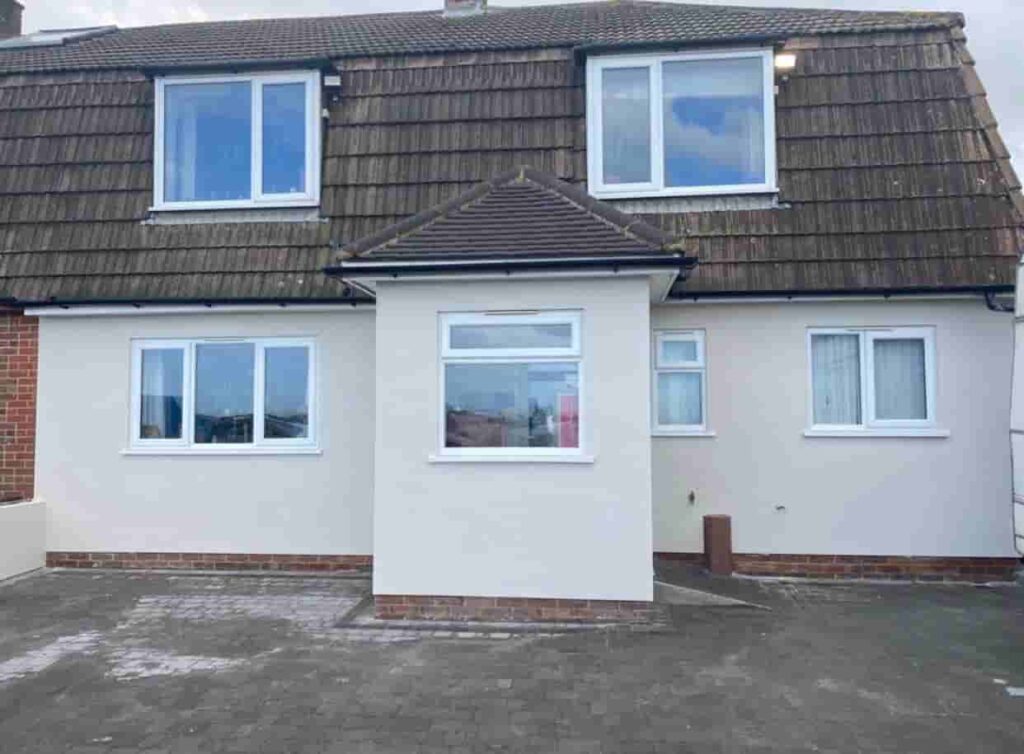
Roof repairs are often the most sensible response to isolated defects. A slipped tile, a localised flashing problem or a small damaged section does not automatically justify replacing an otherwise serviceable roof. When the surrounding materials remain sound and the underlying cause can be identified, targeted repair work can restore the affected area without unnecessary intervention.
The situation becomes different when defects repeatedly develop across an ageing or deteriorating roof. For homeowners in Anlaby, East Riding of Yorkshire, recognising the difference between a repairable local problem and broader roof deterioration can help avoid repeatedly treating symptoms without addressing the underlying condition. Professional assessment is particularly valuable when a roof has developed a pattern of recurring problems rather than one clearly isolated fault.
When Do Repeated Roof Repairs Stop Being the Most Appropriate Approach?
There is no single defect that automatically means a roof should be replaced. The decision depends on the extent of deterioration, the condition of the surrounding materials, previous repair history and whether the roof continues to provide dependable protection as a complete system.
Rather than concentrating solely on the latest leak or damaged tile, it can be more useful to consider the overall pattern.
Repairs Are Becoming Increasingly Frequent
One of the clearest warning signs is a roof requiring attention more regularly than it previously did.
An isolated repair followed by many years of reliable performance is very different from several unrelated defects appearing within a relatively short period.
If one area is repaired and another problem soon develops elsewhere, this can suggest that deterioration is no longer confined to a single location.
At this point, assessing the roof as a whole becomes increasingly important.
New Problems Keep Appearing in Different Areas
A repair should address the defect it was intended to resolve.
However, it cannot prevent unrelated parts of an ageing roof from deteriorating later.
If slipped tiles, damaged coverings, failing details and water ingress begin occurring across several areas, repeatedly approaching each one as an isolated incident may no longer provide a clear picture of the roof’s condition.
The distribution of defects can be just as important as their individual severity.
The Same Leak Keeps Returning
Recurring water ingress deserves careful investigation.
A leak that reappears after previous work does not necessarily mean that the repair itself has failed. Water can travel beneath roof coverings before becoming visible internally, meaning the apparent location of a leak may not correspond directly with its entry point.
Persistent leakage can also indicate that the original cause was more extensive than first understood.
Before carrying out another repair in the same location, the source of the water should be reassessed.
Several Leaks Are Developing Independently
One localised leak can often be traced to a specific defect.
Multiple leaks developing in separate parts of the property present a different situation.
This can indicate that more than one roofing component has deteriorated or that the roof covering is becoming less dependable across a broader area.
It does not automatically mean replacement is necessary, but it provides a strong reason to assess overall condition rather than treating each leak without considering the others.
Large Areas of Tiles or Slates Are Deteriorating
Individual damaged tiles or slates can often be replaced where the surrounding roof remains in suitable condition.
Concern increases when defects are widespread.
If numerous units are cracked, slipping, weathered or becoming increasingly fragile, replacing them individually may address only the most obvious symptoms.
The condition of the surrounding covering should be considered before deciding whether further isolated repairs represent an appropriate long-term approach.
Tiles or Slates Continue to Slip
One slipped tile can result from a localised fixing issue.
Repeated slippage across different sections can indicate a broader problem.
The tiles or slates themselves may have deteriorated around their fixing points, or the supporting components beneath them may require attention.
Simply returning individual units to position without investigating why the problem keeps occurring may lead to further repairs later.
Problems Beneath the Roof Covering May Be Developing
A roof is more than the visible outer covering.
Tiles or slates depend on the components beneath and around them to form an effective roofing system.
Where deterioration affects battens, underlay or other supporting elements, surface repairs alone may become increasingly limited in what they can achieve.
Professional assessment can help determine whether a visible defect is genuinely isolated or whether it reflects deterioration beneath a wider section.
The Roofline Has Become Uneven
Visible changes to the roofline deserve closer attention.
An area that appears noticeably uneven, dipped or different from surrounding sections should not simply be treated as a cosmetic problem.
The cause needs to be understood before deciding on the appropriate work.
A professional inspection can assess whether the change is confined to a small area or forms part of a broader problem affecting the roof.
Previous Repairs Now Cover Numerous Sections
A roof can accumulate repairs throughout its life without necessarily becoming unreliable.
However, when patches and previous interventions become widespread, understanding the condition of the original roof becomes increasingly important.
Different repairs may have been carried out at different times for completely different reasons.
If substantial portions have already required attention and new defects continue appearing, it can be useful to assess whether the roof is now relying on repeated local intervention rather than performing reliably as a whole.
One Repair Leads Quickly to Another
The timing of defects can reveal useful information.
If a roof remains trouble-free for a long period after a repair, the original problem was likely to have been genuinely localised.
If another unrelated defect appears soon afterwards, followed by another, the pattern becomes more significant.
The question then changes from “How do we repair this particular fault?” to “Why are so many parts of the roof now requiring attention?”
Flashing Problems Are Appearing in Several Locations
Flashing helps protect vulnerable junctions and transitions within a roof.
A local defect around one detail can often be repaired independently.
Where deterioration is appearing around several separate junctions, however, it becomes important to consider whether multiple parts of the roof are reaching a similar stage of wear.
Again, the number and distribution of problems matter when assessing overall reliability.
Valleys Are Requiring Repeated Attention
Roof valleys handle significant amounts of rainwater and depend on surrounding materials remaining appropriately positioned and maintained.
Problems in one valley may be localised.
Repeated deterioration, water ingress or defects involving several drainage details can indicate that a wider assessment is worthwhile.
Repairing only the immediately visible symptom without examining surrounding coverings may fail to identify connected deterioration.
Ridge Areas Are Becoming Increasingly Problematic
The ridge is another part of the roof where localised defects can occur.
A small isolated issue can often be addressed without wider work.
However, if deterioration extends along substantial sections or similar problems repeatedly develop after previous repairs, the condition of the broader ridge and adjoining roof covering should be considered together.
Weather Regularly Exposes New Weaknesses
Some roof defects become particularly noticeable during periods of wind or prolonged rain.
A sound roof should not reveal a different problem every time conditions become more demanding.
If each spell of poor weather results in another slipped covering, another leak or another area requiring repair, the roof may be showing a broader decline in reliability.
The individual defects still need assessment, but the repeated pattern should not be overlooked.
Internal Damp Appears in Different Places
Water staining on ceilings or upper walls can provide an early indication that moisture is entering somewhere above.
If staining repeatedly develops in the same place, the source needs careful investigation.
If new marks begin appearing in different rooms or sections of the property, the possibility of several roofing defects should be considered.
Because water can travel before becoming visible internally, diagnosis should focus on the roof itself rather than relying only on the position of the stain.
Repairs Are Becoming Larger Rather Than Smaller
Another useful sign is the increasing scope of each repair.
A roof that once required an occasional tile replacement may later need increasingly substantial sections addressing.
If the area requiring intervention continues to expand, it may indicate that deterioration is spreading through materials that were previously serviceable.
At some point, dealing with connected areas together may become more appropriate than repeatedly treating their edges as separate faults.
Repairs Depend on Surrounding Materials Being Sound
A successful localised repair needs something reliable to connect to.
For example, replacing damaged roof coverings is most effective when adjacent materials remain in suitable condition.
If the surrounding area is also fragile or deteriorated, creating a durable local repair can become increasingly difficult.
This is an important distinction when assessing whether continued repair remains sensible.
Surface Appearance Alone Does Not Determine Reliability
An older-looking roof is not automatically an unreliable roof.
Weathering, colour variation and other visible signs of age can occur while the roof continues to perform effectively.
Likewise, a roof that appears reasonably tidy from ground level can still contain defects that require attention.
Decisions about repair or replacement should therefore be based on condition and performance rather than appearance alone.
Age Alone Does Not Mean a Roof Needs Replacing
There is no value in replacing a roof simply because it has reached a particular age if its materials remain serviceable and defects are genuinely isolated.
Different roofs deteriorate at different rates depending on their construction, materials, exposure and previous maintenance.
Age is useful context, but it should be considered alongside actual condition.
The more important question is whether the roof can still be repaired effectively and continue performing reliably afterwards.
A Single Leak Does Not Automatically Mean Replacement
Finding water inside a property can understandably create concern.
However, one leak can originate from a relatively small defect.
Where the cause is identifiable and surrounding roofing materials remain sound, targeted repair may still be entirely appropriate.
Replacement becomes more relevant when leaks are part of a wider pattern of deterioration rather than an isolated incident.
One Damaged Section May Still Be Repairable
Even an older roof can contain a localised area that has deteriorated more quickly than the rest.
Where surrounding sections remain dependable, repairing or renewing the affected area may provide the appropriate solution.
Professional assessment should establish the extent of the problem before assuming that deterioration in one location represents the condition of the complete roof.
Previous Poor Repairs Can Complicate Future Work
Not all previous roof work necessarily addresses the original cause of a defect.
Repeated patching can sometimes conceal underlying deterioration or make it more difficult to understand how water is travelling through a roof.
Where a roof has a complicated history of repairs, assessment should consider both the original materials and the areas that have subsequently been altered.
This can help establish whether another targeted repair is worthwhile or whether a more comprehensive approach would provide a clearer solution.
Connected Defects Can Point to a Wider Problem
Roofing components work together.
A problem affecting tiles, flashing, valleys or supporting materials may influence neighbouring areas rather than remaining completely independent.
When several defects appear to be connected, repairing them individually can sometimes overlook the broader cause.
Assessing the relationship between different problem areas is therefore important before deciding how much work is genuinely necessary.
The Roof No Longer Provides Confidence Between Repairs
Reliability is ultimately about how consistently the roof performs.
If every repair is followed by uncertainty about which section will fail next, the issue is no longer simply the latest defect.
A roof that repeatedly requires reactive attention may have reached the point where its overall condition needs to be reconsidered.
That does not mean replacement should be assumed. It means the decision should be based on a complete assessment rather than another isolated response.
When Does Roof Replacement Become Worth Considering?
Replacement becomes more relevant when deterioration is widespread, several roofing components are affected, repairs are becoming increasingly frequent or localised work can no longer be carried out against dependable surrounding materials.
The objective is not to replace a roof at the first sign of trouble.
Instead, replacement should be considered when the condition of the roof means repeated repairs are no longer addressing the broader pattern of deterioration.
A professional inspection can help establish where that point has been reached.
A Proper Assessment Should Look Beyond the Latest Defect
When a roof has required several repairs, inspecting only the newest problem provides limited information.
At TRP Roofing Anlaby, we assess roofing problems in Anlaby, East Riding of Yorkshire by considering the immediate defect alongside the condition of surrounding materials, previous repair areas and the overall pattern of deterioration.
Where a targeted repair remains appropriate, there is no reason to recommend more extensive work. Where defects have become widespread or connected, considering the roof more comprehensively can help avoid repeatedly addressing symptoms while the underlying condition continues to decline.
Conclusion
A roof does not become too unreliable to repair simply because it is old or has developed one leak. Localised defects can often be repaired effectively when surrounding materials remain sound and the cause of the problem can be clearly identified.
The warning signs become more significant when repairs are needed increasingly often, leaks recur or appear in different places, tiles or slates continue slipping, deterioration spreads across several sections, previous repairs become widespread or each new period of poor weather reveals another weakness.
The most important factor is the overall pattern. When isolated repairs stop providing dependable periods of performance, it may be time to assess whether broader roofing work is more appropriate.
If your roof in Anlaby, East Riding of Yorkshire is developing repeated problems and you are unsure whether another repair is the right approach, contact TRP Roofing Anlaby. We can assess the roof’s overall condition and recommend an appropriate course of action based on what genuinely requires attention.
Call us on: 01482 420 399
Click here to find out more about TRP Roofing Anlaby
Click here to complete our contact form and see how we can help with your roofing needs.